Lead Chromate in Haldi: The Toxic Truth Behind India's Fake Spice Epidemic

India is the largest producer, consumer, and exporter of spices on earth. Every single kitchen—from a village hut in Haryana to a luxury apartment in South Delhi—runs on the same ancient foundation: Haldi, Mirch, Dhaniya, Jeera, Kaali Mirch.
These five ingredients have built civilizations. They are not just flavor compounds; they are the core of Ayurvedic medicine, the backbone of immune defense, the reason Indian food is revered across the globe.
But beneath the vibrant colors and intoxicating aromas of the Indian spice market lies a deeply disturbing reality. A reality backed by cold, hard government data.
Between 2022 and 2024, FSSAI analyzed 23,898 spice samples across India. Of those, 1,241 were categorized as "unsafe" and another 1,559 were found to be "sub-standard." That is nearly 12% of all tested spices failing basic safety standards. In the export market, the numbers are even more alarming—rejection rates hit 14.5% for chilli powder alone.
These are not abstract statistics. These are the spices sitting in kitchens right now. The yellow powder is stirred into warm milk for a child. The red chilli is fried in hot oil for dinner. The black pepper is ground over a plate of dal.
This is the anatomy of a systematic, industrial-scale fraud—and it is poisoning a nation from the inside out.
The Bright Yellow Lie: Lead Chromate in Turmeric

Turmeric is sacred. Its active compound, Curcumin, is one of the most clinically studied anti-inflammatory molecules in the history of medicine. Authentic, pure Haldi is a dense, earthy, golden-orange powder with a warm, slightly bitter taste.
But Curcumin is also valuable. Extremely valuable.
Before that turmeric root reaches your kitchen, it often passes through a chain of middlemen. At some point in that chain, a calculation is made: extract the expensive Curcumin, sell it to pharmaceutical companies for massive profit, and replace the lost color with something far cheaper.
That "something" is Lead Chromate, a bright yellow industrial pigment used to paint road markings and color cheap plastic toys. It is a potent neurotoxin.
Research published in collaboration with Stanford University systematically assessed Lead Chromate contamination across South Asian turmeric markets. The findings were staggering. Significant percentages of samples, particularly from wholesale and loose retail markets, exceeded FSSAI's maximum permissible limit of 10 µg/g of lead. Regional hotspots were identified in parts of Bihar, West Bengal, and Tamil Nadu, where lead concentrations in some samples were found to be drastically higher than regulatory limits.
The health consequences are devastating. Lead is a cumulative toxin. It does not leave the body easily. Chronic, low-level consumption through adulterated Haldi leads to:
- Neurological damage in children (reduced IQ, developmental delays)
- Kidney failure in adults
- Reproductive harm and bone deterioration
- Cardiovascular damage over prolonged exposure
The cruelest irony is this: families consuming Haldi Doodh (golden milk) believing they are building immunity are potentially ingesting the very substance destroying their nervous systems.
The Red Deception: Brick Powder and Sudan Red in Chilli

If the Haldi fraud is about stolen Curcumin, the chilli powder fraud is about manufactured weight.
Pure red chilli powder is made exclusively from dried, stemless chilli pods. It is relatively expensive to produce because the stems, seeds, and damaged pods must be manually removed before grinding.
The industrial shortcut? Crush everything, stems, seeds, stalks, and then add bulk. The most common adulterants identified by FSSAI and academic research in loose chilli powder are:
- Brick Powder (Eet ka Churan): Finely ground red brick dust is mixed into chilli to increase weight and volume. It is cheap, red-colored, and nearly impossible to detect with the naked eye in a pre-ground powder.
- Sudan Red Dye: An illegal, industrial-grade textile dye classified as a Group 3 carcinogen by the International Agency for Research on Cancer (IARC). It is added to make dull, low-grade chilli appear vibrant and premium.
- Sawdust and Salt Powder: Used as cheap fillers to increase packet weight without affecting the color.
The FSSAI water test for chilli powder is brutal in its simplicity: drop a teaspoon into a glass of water. If brick powder is present, gritty sediment settles at the bottom. If artificial dyes are present, colored streaks bleed rapidly through the water. Pure chilli simply settles cleanly.
The Black Market: Papaya Seeds Disguised as Black Pepper

Black Pepper is the most expensive common spice in the world. A single kilogram of premium whole peppercorns commands a significant price. This economic reality makes it an irresistible target for adulteration.
The weapon of choice? Dried Papaya Seeds.
Dried, blackened papaya seeds are virtually identical in size, shape, and weight to real peppercorns. They contain zero Piperine (the active compound that gives black pepper its sharp heat and its miraculous ability to increase nutrient absorption by up to 2000%). They are, essentially, inert biological waste being sold at the price of medicinal gold.
The detection method is elegantly simple. Drop a handful of peppercorns into a glass of water. Authentic black pepper is incredibly dense and sinks immediately to the bottom. Papaya seeds, being lighter and hollow, float on the surface.
Online communities on Reddit (r/IndianFood, r/AskIndia) and Quora threads consistently arrive at the same consensus: purchasing whole spices and grinding them at home remains the single most effective defense against powder-based adulteration. But even whole spices are not immune—hence the need for rigorous source verification and lab testing.
The Invisible Threats: Sawdust in Dhaniya, Argemone in Mustard

The epidemic extends far beyond the "big three".
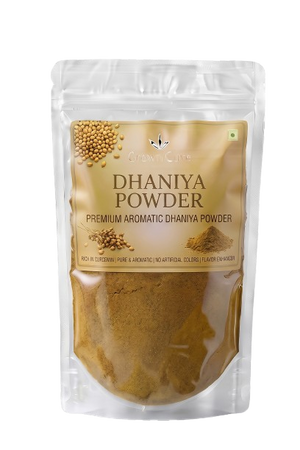
Coriander powder (Dhaniya) is aggressively adulterated with sawdust and horse dung—cheap, brown, fibrous materials that blend seamlessly into the coarse texture of ground coriander. Mustard seeds (Rai) are contaminated with Argemone mexicana seeds (a toxic weed), which when consumed cause a severe, life-threatening condition called Epidemic Dropsy, characterized by massive swelling of the limbs, glaucoma, and cardiovascular collapse.
Even premium spices like Cardamom (Elaichi) are not spared. Dull, naturally dried pods are dipped in toxic Malachite Green dye to achieve an artificially vibrant neon-green appearance that deceives consumers into believing they are purchasing the freshest product.
The pattern is universal: strip the valuable compound, replace it with a cheap or toxic substitute, and rely on the consumer's inability to distinguish the fraud in a pre-ground powder.
Breaking the Chain: The Grow n Cure Standard
The fundamental vulnerability in the Indian spice supply chain is distance. The further a spice travels from the field to the kitchen, the more hands it passes through, and the more opportunities exist for adulteration.
Grow n Cure was built to collapse that distance entirely.
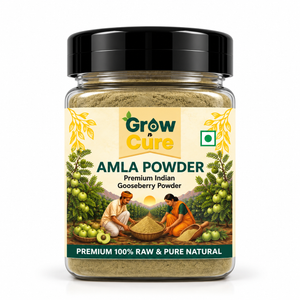
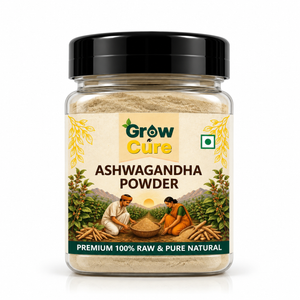
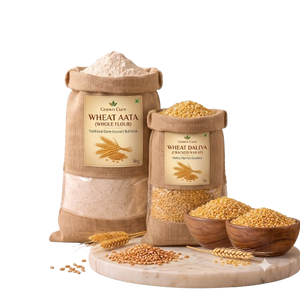
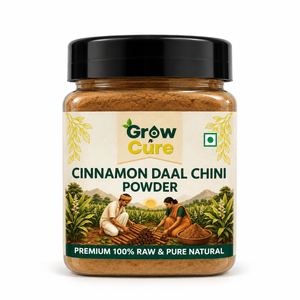
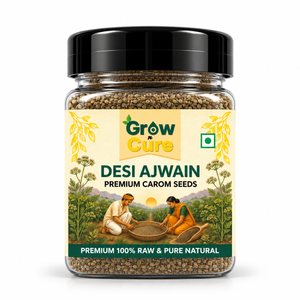
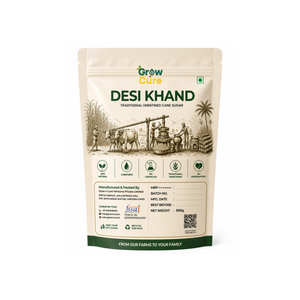
Operating directly from Rohtak, Haryana, we are not distributors. We are not marketers. We are Makers. We control every single step of the process—from sourcing premium raw materials to the final stone-grinding and packaging—within our own facility.
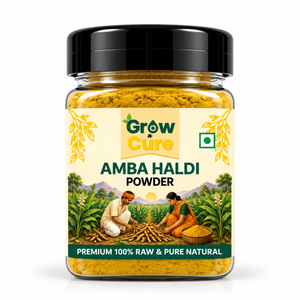
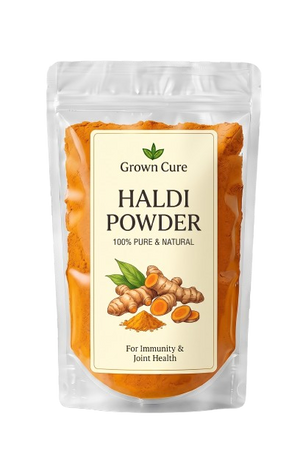
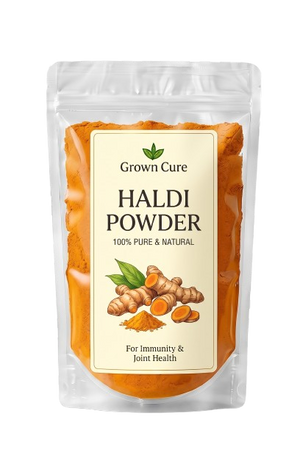
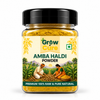
- Zero Curcumin Extraction: We grind whole, sun-dried turmeric roots. We do not extract the Curcumin before selling you the powder. The intense aroma and deep golden color of our Haldi is the absolute proof of that commitment.
- Zero Chemical Dyes: Our Red Chilli Powder derives its rich, vibrant color exclusively from premium, stemless chilli pods. We guarantee 0% Sudan Red, 0% Brick Powder, and 0% artificial coloring agents.
- Zero Papaya Seeds: Our Black Pepper is mechanically sorted using advanced optical grading to ensure every single peppercorn is 100% authentic.
- FSSAI Lab Tested: Every batch of every spice is rigorously tested in accredited laboratories for heavy metals, pesticide residues, fungal toxins (Aflatoxins), and foreign matter contamination.
- Direct-to-Kitchen Delivery: Whether you are looking to buy pure spices Rohtak or need FSSAI tested spices Delhi NCR, we deliver the full range of premium, unadulterated spices directly to your doorstep across Haryana, Gurgaon, Noida, and Faridabad.
The age of blind trust in loose market powders is over. The data is clear. The science is undeniable. The only question that remains is whether you will continue to gamble with your family's health, or whether you will demand absolute transparency from the source.
👉 Explore the 100% Pure, FSSAI-Tested Grow n Cure Spice Range Here
Frequently Asked Questions
Need help? Find answers to the most common questions below.